导航分类
导航分类KEYNOTES
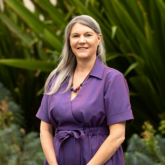
Distinguished Professor Karin Verspoor FTSE FAIDH Executive Dean, School of Computing Technologies, RMIT University | Distinguished Professor Karin Verspoor is Executive Dean of the School of Computing Technologies at RMIT University in Melbourne, Australia. She is a Fellow of the Australian Academy of Technological Sciences and Engineering, a Fellow of the Australasian Institute of Digital Health, and a 2021 “Brilliant Woman in Digital Health”. She was also selected as a finalist in the Women in AI Australia/New Zealand Awards 2022 for “AI in Innovation”. Karin is passionate about using data and AI to improve health outcomes for people. Her work has a specific emphasis on the use of natural language processing to transform unstructured data in biomedicine, ranging from scientific literature to clinical texts, into actionable information. |
Karin held previous posts as Director of Health Technologies and Deputy Head of the School of Computing and Information Systems at the University of Melbourne, as the Scientific Director of Health and Life Sciences at NICTA Victoria Research Laboratory, at the University of Colorado School of Medicine, and at Los Alamos National Laboratory. She also spent 5 years in tech start-ups during the US Tech bubble, where she helped design an early artificial intelligence system. Karin received a BA with a double major in Computer Science and Cognitive Sciences from Rice University in Houston, TX, USA, and completed both a MSc and PhD in Cognitive Science and Natural Language at the University of Edinburgh, UK. Title: AI co-scientists: the evolving role of Artificial Intelligence tools in science Abstract: There have been a number of recent high-profile publications on the use of Artificial Intelligence tools to support scientific discovery and in some cases to perform the entire process of science from ideation to data analysis to paper review. Biomedicine is a key area of focus for many of these tools, given the high value of research aimed at improving human health. In this talk I will review some of the history of the use of AI and specifically natural language processing to support science, and take a look at how large language models (LLMs) are now being applied in this context. Along the way I will discuss some of the strengths and limitations of both the old and the new approaches, to inform some thoughts about what the future for AI technologies in science might look like. | |
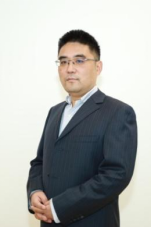
Professor Xing-Ming Zhao Fudan University | Professor Xing-Ming Zhao is a distinguished professor and Vice Dean of the College of Biomedical Engineering, Fudan University, China. He received his PhD degree from the University of Science and Technology of China. He is the President of Shanghai Society for Bioinformatics, and Vice President of ISCB-China. He focuses on the interdisciplinary research between biomedicine and artificial intelligence. He has published more than 160 papers in peer-reviewed journals, e.g. Nature and Cell. He is the Fellow of China Association of Artificial Intelligence and the Fellow of IET. He is a senior member of IEEE, Co-Chair of IEEE SMC Technical Committee on Systems Biology and Vice-Chair of ACM SIGBIO China. He is also the lead guest editor and the editorial member of several journals, e.g. Science Bulletin, Genome Biology, IEEE TCSS, IEEE/ACM TCBB, Neurocomputing, Journal of Theoretical Biology, IET Systems Biology, and so on. |
Title: Data and AI driven exploration of human gut microbiome Abstract: The human gut is composed of various types of microorganisms. However, our knowledge about human microbiome is far from comprehensive. In this talk, I’ll present our recent work on the exploration of human gut microbiome with long-read sequencing, and some algorithms and tools we have developed for analysis of human gut microbiome. I’ll also show some new findings on the enterotypes of gut mycobiome and the association between gut microbiome and diseases. | |